 |
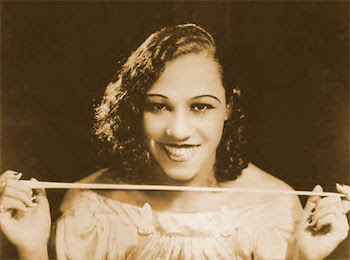
| Damn legend. |
As noted in the prior chapter on Cab Calloway, he grew up in the shadow of his older sister, Blanche Calloway. Pulling from multiple sources, first quoted from a website called Jazz Rhythm:
“Cab Calloway borrowed key elements from his elder sister’s act -- her bravura vocal style and Hi-de-Ho call and response routines. His 1976 memoir acknowledges her influence, declaring Blanche ‘vivacious, lovely, personality plus and a hell of a singer and dancer,’ an all-around entertainer who was ‘fabulous, happy and extroverted.’”
Now, from a site called The LeEMS Machine:
“She is relentlessly written about as residing in the shadow of her younger brother Cab Calloway. However, scholars and researchers have pointed out that, at one point, Blanche Calloway had attained more fame and renown, helping her brother in his show business breakthrough and inspiring his famous style.”
She would wind up living in Cab's shadow by the end of the 1930s, but, all things considered, Blanche Calloway arguably had the bigger life; it wouldn’t surprise me if neither one of them cared one way or the other. He borrowed from her style, she borrowed phrasing and characters from his songs (see cameos by Minnie the Moocher and the King of Sweden in Blanche Calloway’s hit, “Growlin’ Dan”), and so on. Both Calloways made their mark during the period when white audiences finally woke up to what black artists had been doing for decades. In this chapter, the “Hi De Ho Man” makes room for the woman who started her famous “Just a Crazy Song” with “Hi Hi Hi.”
Like her younger brother, Blanche Calloway was born in Rochester, New York, only five years earlier, in 1902. The family returned to their real home, Baltimore, Maryland, when Blanche was a teenager, with their mother, Martha Eulalia Reed, and her second husband, an insurance salesman named John Nelson Fortune.A church organist, Ms. Reed taught her children to play and love music, while trying to steer them away from careers in music, and she failed with at least three of them. In Blanche’s case, the betrayal came at the hands of a music teacher who pushed her to audition with a local talent scout. After Blanche dropped out of Morgan State College in the early 1920s, she wouldn’t hold another straight job until somewhere around the end of World War II.
“Cab Calloway borrowed key elements from his elder sister’s act -- her bravura vocal style and Hi-de-Ho call and response routines. His 1976 memoir acknowledges her influence, declaring Blanche ‘vivacious, lovely, personality plus and a hell of a singer and dancer,’ an all-around entertainer who was ‘fabulous, happy and extroverted.’”
Now, from a site called The LeEMS Machine:
“She is relentlessly written about as residing in the shadow of her younger brother Cab Calloway. However, scholars and researchers have pointed out that, at one point, Blanche Calloway had attained more fame and renown, helping her brother in his show business breakthrough and inspiring his famous style.”
She would wind up living in Cab's shadow by the end of the 1930s, but, all things considered, Blanche Calloway arguably had the bigger life; it wouldn’t surprise me if neither one of them cared one way or the other. He borrowed from her style, she borrowed phrasing and characters from his songs (see cameos by Minnie the Moocher and the King of Sweden in Blanche Calloway’s hit, “Growlin’ Dan”), and so on. Both Calloways made their mark during the period when white audiences finally woke up to what black artists had been doing for decades. In this chapter, the “Hi De Ho Man” makes room for the woman who started her famous “Just a Crazy Song” with “Hi Hi Hi.”
Like her younger brother, Blanche Calloway was born in Rochester, New York, only five years earlier, in 1902. The family returned to their real home, Baltimore, Maryland, when Blanche was a teenager, with their mother, Martha Eulalia Reed, and her second husband, an insurance salesman named John Nelson Fortune.A church organist, Ms. Reed taught her children to play and love music, while trying to steer them away from careers in music, and she failed with at least three of them. In Blanche’s case, the betrayal came at the hands of a music teacher who pushed her to audition with a local talent scout. After Blanche dropped out of Morgan State College in the early 1920s, she wouldn’t hold another straight job until somewhere around the end of World War II.

